






The Latest

Undergraduate Researcher Explores How Viruses and Their Parasites Evolve Together
Viruses evolve quickly, often finding ways to escape antiviral drugs. A new study led by WID undergraduate Shiv Muthupandiyan explores whether new antiviral therapies could evolve alongside them. The research focuses on defective interfering particles, or DIPs, mutant viral particles that act as parasites of viruses. DIPs cannot reproduce on their own, so they use a virus’s replication machinery and consume resources inside infected cells, slowing viral growth. By modeling how viruses and DIPs adapt to one another over time, the study offers a new way to think about antiviral therapies that may be better able to resist viral escape.

Mel Hammond Uses Science to Shape Her Stories
WID’s new Writer in Residence, Mel Hammond, is passionate about capturing accurate scientific information and weaving it into YA books using language that feels credible and meaningful to young audiences. Her work shows how science can shape a story, deepen curiosity, and help young readers see the world in new ways.
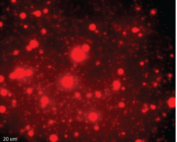
How Simple Bubbles May Hold Clues to Life’s Beginnings
One of humanity’s most enduring questions is also one of its biggest: how did life begin? Long before DNA, genes, or cells as we know them existed, how did life emerge from non-living chemical systems? One possible explanation lies in simple chemistry, which has the capacity to evolve and become more complex. In a new study at the Wisconsin Institute for Discovery (WID), Tymofii Sokolskyi, a PhD candidate in Astrobiology & Evolution working in the David Baum Lab and the Department of Botany, takes a fresh look at that question.
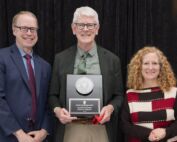
Stephen Wright honored with Vilas Research Professorship
Created for the advancement of learning and supported by the estate of professor, U.S. senator and UW Regent William F. Vilas (1840-1908), Vilas Research Professorships are granted to UW–Madison faculty with proven research ability and unusual qualifications and promise.